Steps to Strong Communication for
A Strong Relationship
- Tone speaks more than words!
Imagine getting your favorite flavored cake, but the icing was just disturbingly unappealing, you wouldn’t even want to cut into the cake and try it? Right? So even though we should all live by that quote “never judge a book by its cover”, it’s quite difficult to decipher words from the tone they are wrapped up in. Because tone is the sound of our emotions.
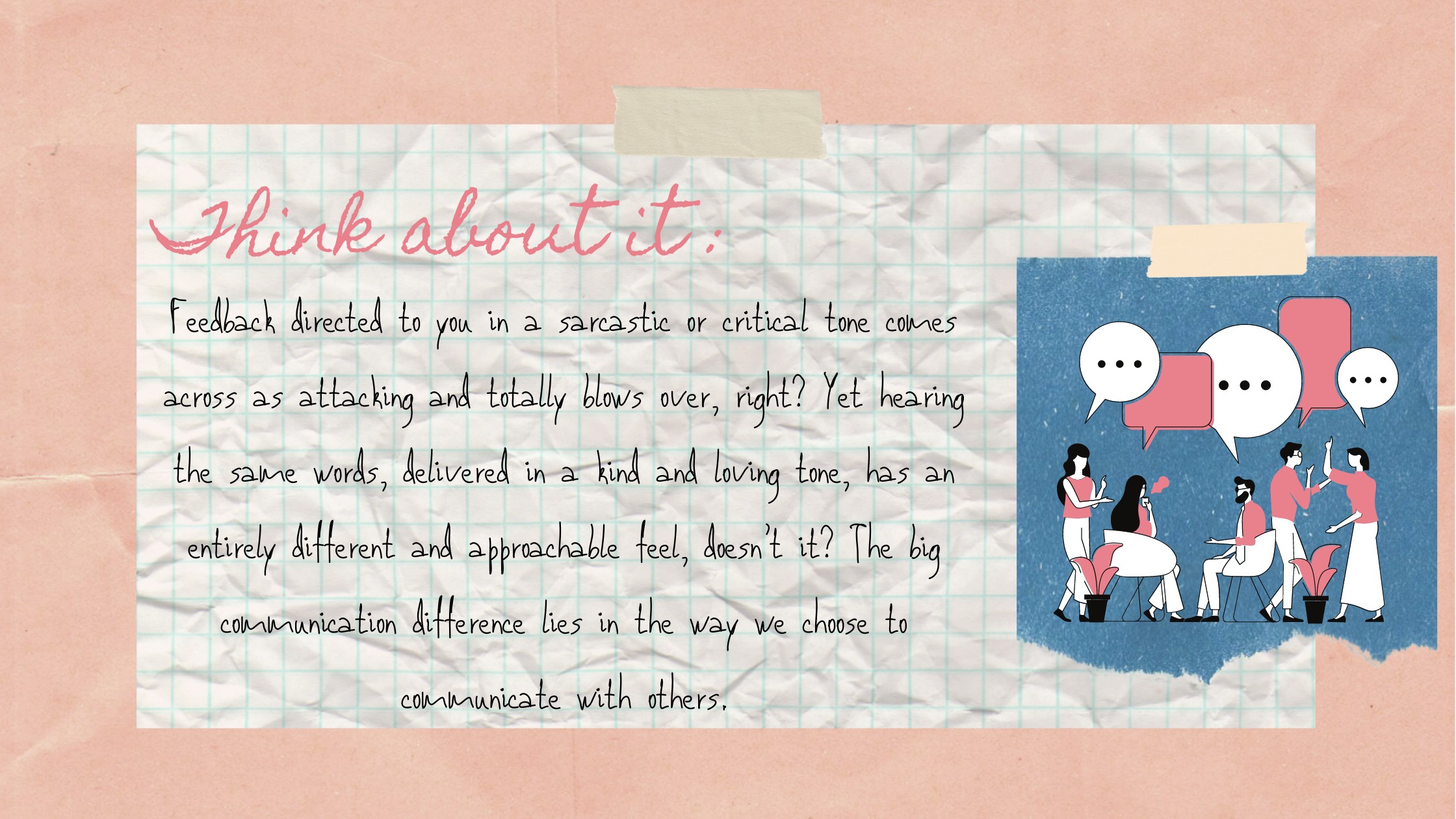
But while it seems simple to be able to control our tone, it takes a lot of conscious efforts as the tone of voice often conveys more accurately what we are feeling and what is on our mind, than our actual words do. In other words, our tone tells the truth even when our words do not, even when we are unaware of that truth ourselves. Unfortunately, the tone is what others respond to first. Reflect: Have you ever said “I love you” in a frustrated manner that provokes bitterness and then innocently wonder why you are being repelled and unfairly attacked by the person to whom you’ve said it too. quite rightly responds to our tone rather than our words. And this happens often and is seriously damaging your relationships. Therefore, while we speak, it is incredibly important to listen to our voice, so that we are able to monitor our tone and adjust it to get our point across. Also, be authentic with your words, so if you are mad, use your words to convey that message, rather than saying nice things while your tone tries to push out your real emotions.
- Your choice of words can make all the difference!
Small adjustments in your choice of words from negative to positive can make all the difference in the response you are likely to get.
Consider this: You work hard to cook a meal, but you added a bit less salt, making the dish slightly bland. What response would you prefer?
“Eeewww, that is disgusting!”
Or
“Thanks for your hard work in preparing this dish, but I feel if you added more salt it would have tasted better”
You probably prefer the second phrase, right? Now, what is the difference? The difference is in the words!
- Pay attention to body language, it makes a point…
Body language is the use of physical behavior, expressions, and mannerisms to communicate nonverbally, often done instinctively rather than consciously. The way you sit, the way you tilt your head, and the way you fold your arms all communicate strong messages. They can either put people at ease, build trust, display love, and draw others towards you, or they can attack, offend, confuse, and undermine the message you are trying to convey. For example, if you are trying to make someone feel better, rather than have your arms crossed and sitting at the other corner of the room, you may want to hold their hand, look them in the eye and tilt your head to show feelings of compassion and care.
- Stop the words and bring out the ears…
Apart from the way listening makes the other person feel, it is as pertinent for you in understanding their part of the conversation. Effective listening can mitigate misunderstandings and confusion. Remember that listening is not the same as hearing. Hearing just refers to the sound entering your ears, so just the physical process that happens automatically. But listening is more than that, it calls for both focus and effort. Listening is indeed paying attention to what is being said, but also the way it is being said. Going back to the tone of voice, vocabulary, and body language discussed above, while you listen you must pay attention to these 3 things and analyze the underlying meaning. For example, by analyzing one’s body language you can pick up on negative cues that they may be hiding or may even be unaware of while they speak. These negative cues can include crossed arms, poor eye contact, tense facial expressions, and a body turned away from you. Also as mentioned above, our tone of voice conveys what we are actually feeling, and so Being able to demonstrate that you have picked up on these cues and then reciprocate them with appropriate gestures, the other person truly feels that you are indeed listening, quite intuitively strengthening your relationship.